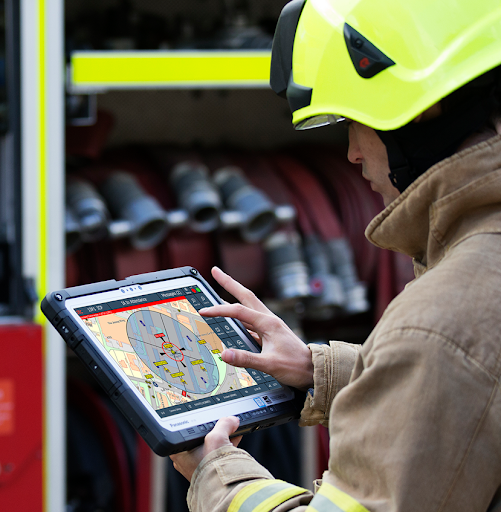
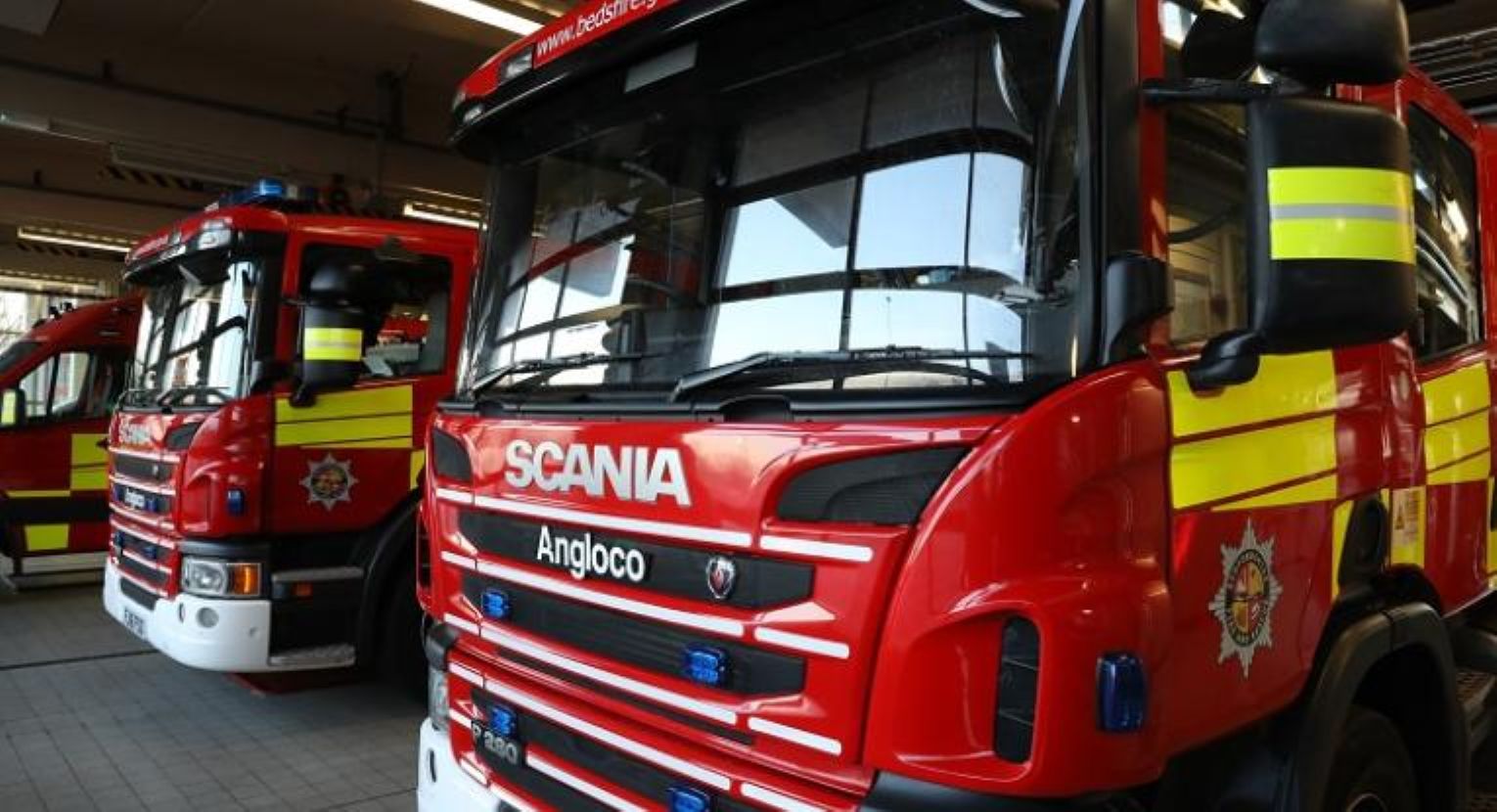
The picturesque county of Suffolk, in East England, is home to 786,000 people spread over 1,466 square miles of land. Every day, Suffolk Fire and Rescue Service (SFRS) work tirelessly to keep their community safe, no matter the size or scale of the emergency.
In 2025, Suffolk FRS went live with a new control room, utilising Motorola Solutions Guardian software, just 18 months after signing the contract – a timescale almost unheard of in the public sector. We sat down with Chief Fire Officer Jon Lacey to discuss the project, and how close collaboration between Motorola Solutions and SFRS was a key component of its success.
The unique challenges of Suffolk’s geography for the Fire and Rescue Service
“Suffolk is rural and very beautiful, but it still has risks like any other county,” Chief Lacey explains. A nuclear power station is located on the east coast, with an additional station currently under construction (Sizewell C) and one more set for demolition (Sizewell A). The coast also features Felixstowe Port, which is one of the biggest container ports in Europe; shipping companies unload a huge number of containers there every single day, many of which contain hazardous substances.
From a traffic perspective, Suffolk is divided by the A14 dual carriageway and hundreds of small roads that cover the county. Chief Lacey notes that the county is full of properties with thatched roofs, many of which also lack good water access. Additionally, if those challenges weren’t enough, Suffolk sometimes bears the brunt of coastal inundation because of high tides in the North Sea.
As a result of these complex factors, Chief Lacey explains, “We needed a control system that could deal with multiple high-stakes emergencies simultaneously. Even your average car fire on the A14 can result in 40 calls simultaneously that our operators have to stack, log, answer, and then mobilise resources to.”
Time for an upgrade
When Chief Lacey joined SFRS as CFO four years ago, he undertook a risk evaluation for the entire county. The team determined that in order to best serve the public, they needed to invest in a new, centralised control centre that could keep up with the growing level of demand.
From a software perspective, Chief Lacey says their requirements were as follows: “We wanted a solution that other fire and rescue services were already using successfully. It needed to be off the shelf, and cloud-based, because it’s much easier to fix bugs and receive new functionality if the platform is hosted in one central location. We started exploring providers, and it became really clear that the team at Motorola Solutions could tick all of those boxes while also providing us with a roadmap for new features. There aren’t many other providers, if any, who could give us such a high level of service – and there definitely aren’t any other providers who are so forward-thinking in terms of future development.”
Alongside the software, Chief Lacey and his project team also started to build out their new control room, transforming it into a professional space in which operators would enjoy working.
From signing the contract to going live, in just 18 months
As anyone working in a control room will know, deploying a new software platform can be arduous due to the mission-critical nature of the solution; any lapse in public service is unacceptable. Chief Lacey was adamant, however, that the project would also be completed in a timely manner. In his words, “There’s nothing more important than making sure that when the public calls 999, there is a reliable system working in the background for them – a system that can help well-trained operators take the call, select the right resources, and mobilise them quickly.”
Regarding the speed of the deployment, he notes, “I think it’s the future of fire control rooms. We need to be much more agile – and that’s what the team at Motorola Solutions helped us to be. We couldn’t wait two or three years to complete a project of this significance.”
The new system went live at 12:00 on the 24th of June 2025, and the first call came in at 12:09. Chief Lacey says, “ For the first call, we were hoping for a routine incident, but the caller was actually reporting a house fire, which is obviously very serious. We mobilised the crew, and then another call came in saying that the original caller required rescuing, making it even more critical. The control room went into a flurry of activity, making sure that the ambulance service and police were informed. It really goes to show that you need a system that is reliable, easy to use and intuitive when speed, accuracy and dependability are non-negotiables.”
A chief’s commendation
To celebrate the exceptional work of the control room team at SFRS and Motorola Solutions, Chief Lacey presented them with a Chief’s Commendation at the Service’s annual awards ceremony in October 2025. As Chief Lacey puts it, “When I look back over the project and the goals I set the teams, the amount of effort people put in, their resilience and determination… to see what they’ve built and what they’ve achieved is just phenomenal.”
“The fact that we built a new control centre from scratch, assembled a team of operators from the ground up, bought an IT system off the shelf, installed it, and trained our operators on how to use it, all within the timeframe we did it in, is nothing short of amazing.”
The Suffolk control room, transformed
Chief Lacey is very happy with the state of his control room today. He says, “The feedback that I get is that our operators love the working environment and the room we’ve built. They like the technology, they like their role, and they’re really pleased to be a part of SFRS.” In fact, the new setup has been so popular that some operators who previously left the Service have actually returned to work in the control room again.
Another benefit of the project is that SFRS has seen an increase in activity: “That means that we’re moving fire engines around the county much more effectively on standby duties, which means the county is better covered.” However, Chief Lacey’s plans don’t end there. He says, “We’re eager to bring in more technology to help us stay efficient and productive. We’re not stopping at our mobilisation system – we’re always asking, where can we go with our tools? What can we build on? What are we doing next?”
The combination of forward-thinking leadership, dedicated internal teams and a close, collaborative partnership with Motorola Solutions has enabled SFRS to transform its emergency response capability – setting a new benchmark for public sector technology deployment in the future.