St. George Consolidated Communications Center in Utah recovered 8–10 hours for day and swing shifts while keeping the lines open for true emergencies and protecting dispatcher morale.
When a major shooting incident unfolded hundreds of miles away, no one at the St. George Consolidated Communications Center in Utah expected to be directly impacted. And then, suddenly, a quiet Friday afternoon turned into a call handling surge.
“You see the incident on the news and think, ‘that’s quite a ways away and doesn’t have anything to do with us,’ ” notes Center Manager, Justin Grenier. “And then, within the span of a few hours we’re part of the equation, and getting so many calls from the public because the suspect was identified as someone from our area.”
Assistant Manager Austin Despain reports that every line was ringing, but very few needed an actual emergency response. “The calls were well-intentioned, but not actionable. Our call volume turned into someone calling almost every second.”
“As the incident was being managed at the federal level,” Grenier explains, “the center’s role was basically to refer callers to the federal tip line.”
“The community simply wanted to help,” Despain acknowledges. “They recognized a name, recalled a passing connection or saw something online. Their intentions were genuine, but the volume quickly overwhelmed us, taking away time from the true emergencies that still needed immediate care.”
The right timing
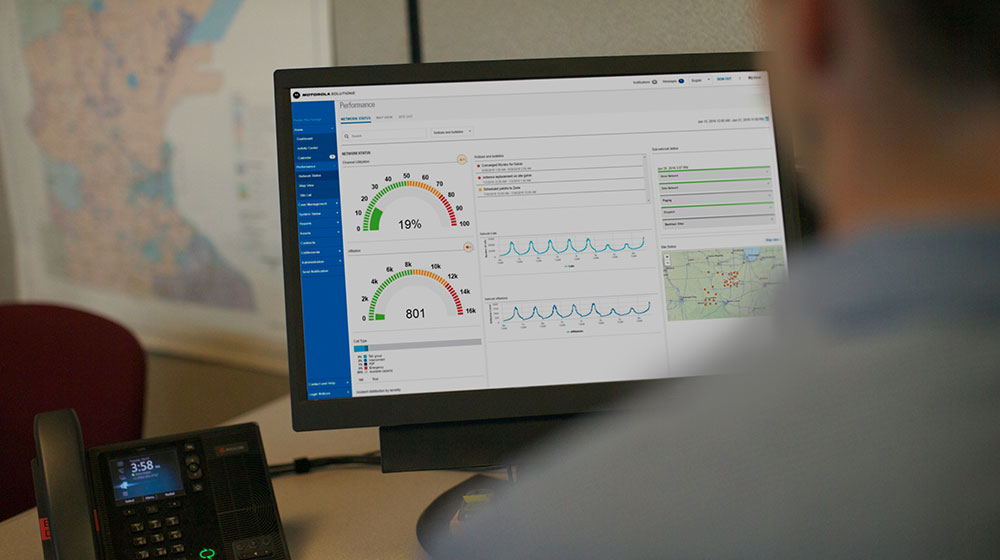
Fortunately, the call surge occurred while St. George was already testing Motorola Solutions’ Non-Emergency Call Agent. Within minutes, the technology became their lifeline.
“We didn’t need anything complicated—just a simple pass-through recording,” explains Despain. “Motorola had it set up within fifteen minutes. We expected it to take hours.”
Once active, Non-Emergency Call Agent automatically routed the non-emergency calls to the appropriate federal agency and provided a pre-recorded message with next-step information. “We watched our phones retreat back to normal conditions,” Despain reports. “The software went off without a hitch and did exactly what it was supposed to do.”
Resources recovered, morale restored
“Over the course of the weekend,” says Grenier, “we estimate that we saved roughly 8-10 hours for the day shift and swing shift – Friday night through Sunday – which translates into at least two full dispatcher shifts — by offloading calls that didn’t require a local response.”
Removing the burden of having to answer the surge of non-emergency calls meant less stress and restored calm for telecommunicators. “It allowed us to continue to manage our day-to-day operations and true emergencies,” Despain added. “Our team could finally take a collective breath.”
Grenier and Despain say the experience reinforced how vital it is to have flexible, ready-to-deploy tools when the unexpected strikes. What could have quickly overwhelmed their team of seven telecommunicators instead became a moment that showcased coordination, clarity and composure.
For more information on managing non-emergency calls, refer to this blog: Answer 9-1-1 calls without draining resources


Jeanne Weed
December 12, 2025
It’s great to see technology like the Non-Emergency Call Agent effectively protecting valuable dispatcher time and preserving morale during unexpected call surges! Thanks for sharing this story, Flynn!